Editor's Picks

While working on a list of synonyms of European White...
Roderick Cameron
|
Aug 24, 2026
Report led by The Morton Arboretum will help prioritize oak...
Website Editor
|
Aug 06, 2026
Motivation
I live in the village of Dolné Dubové...
Jozef Čapkovič
|
Jul 20, 2026
Plant Focus
The only oak species endemic to Africa is rare in cultivation. It shouldn't be.
I have been drawing Fagaceae species for twenty years and in 2004 I published Pictorial Encyclopedia of Oaks in Japan. You may ask why I draw Fagaceae exclusively, but I have no specific reason for this. I just happened to start drawing them and continued the work because it was a pleasure to do so. I used to draw illustrations for children's books, but I wanted to draw real things as precisely as possible instead of drawing simple images featuring what I was asked to show. I like animals, birds, and insects, but they are hard to catch. There are beautiful flowers like roses, orchids and cherry blossoms, but they are already very popular subjects for drawings. So I decided to pick some trees, because I like big trees.
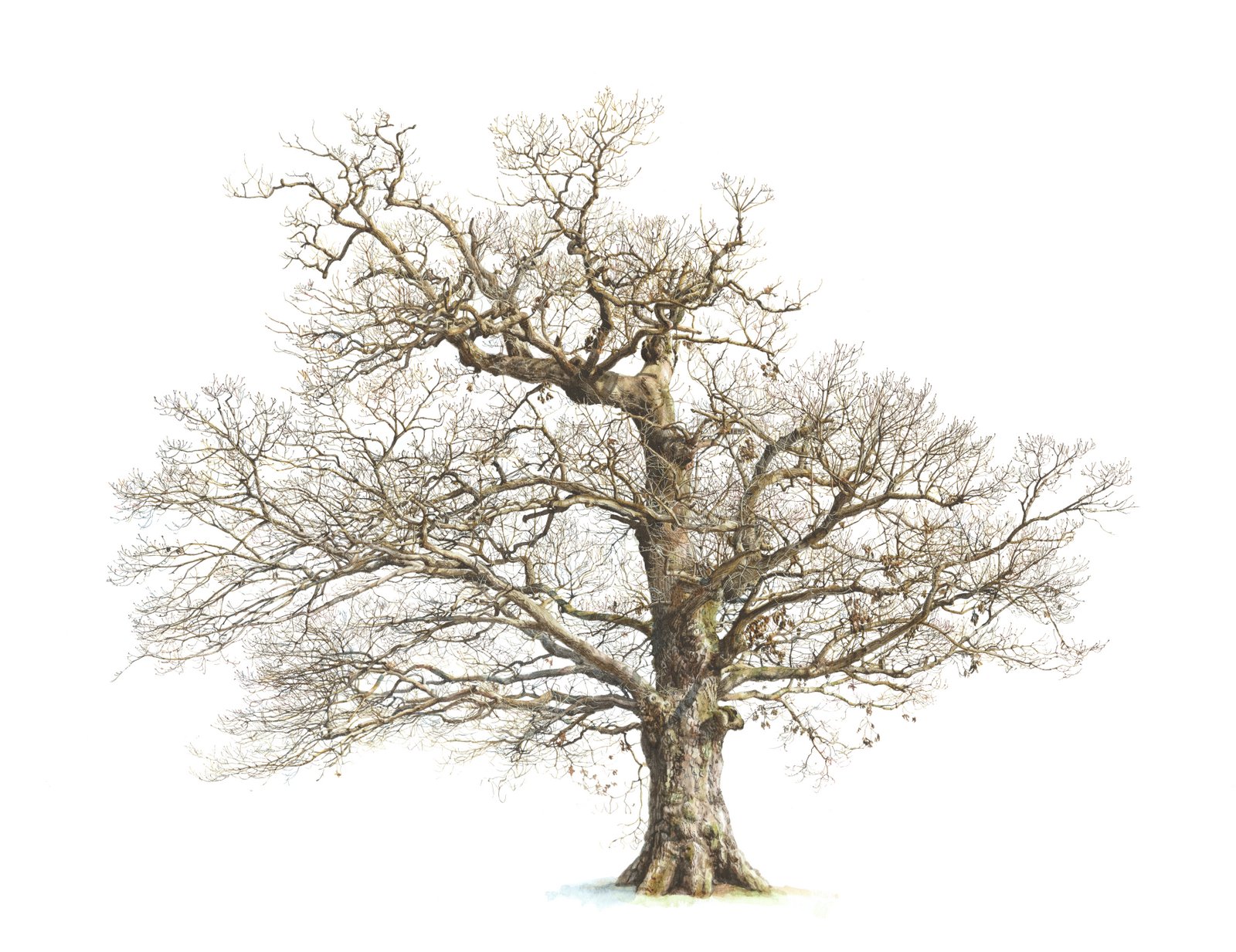 |
| Quercus aliena Blume |
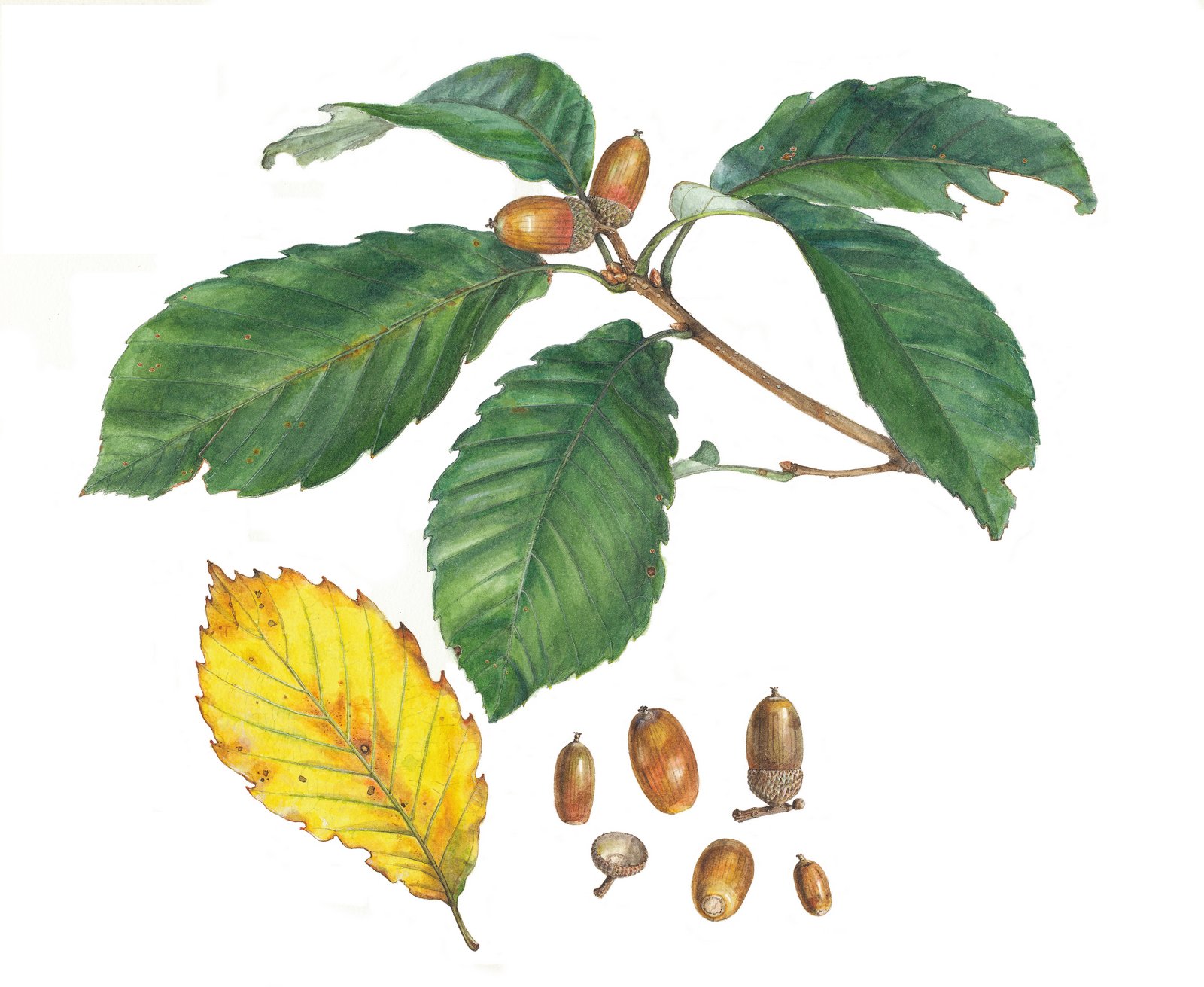 |
| Quercus serrata Murray |
Though I like trees, I have not studied botany. Therefore, I decided to pick some trees which could be found easily. They would be those found in parks or in the natural forest.
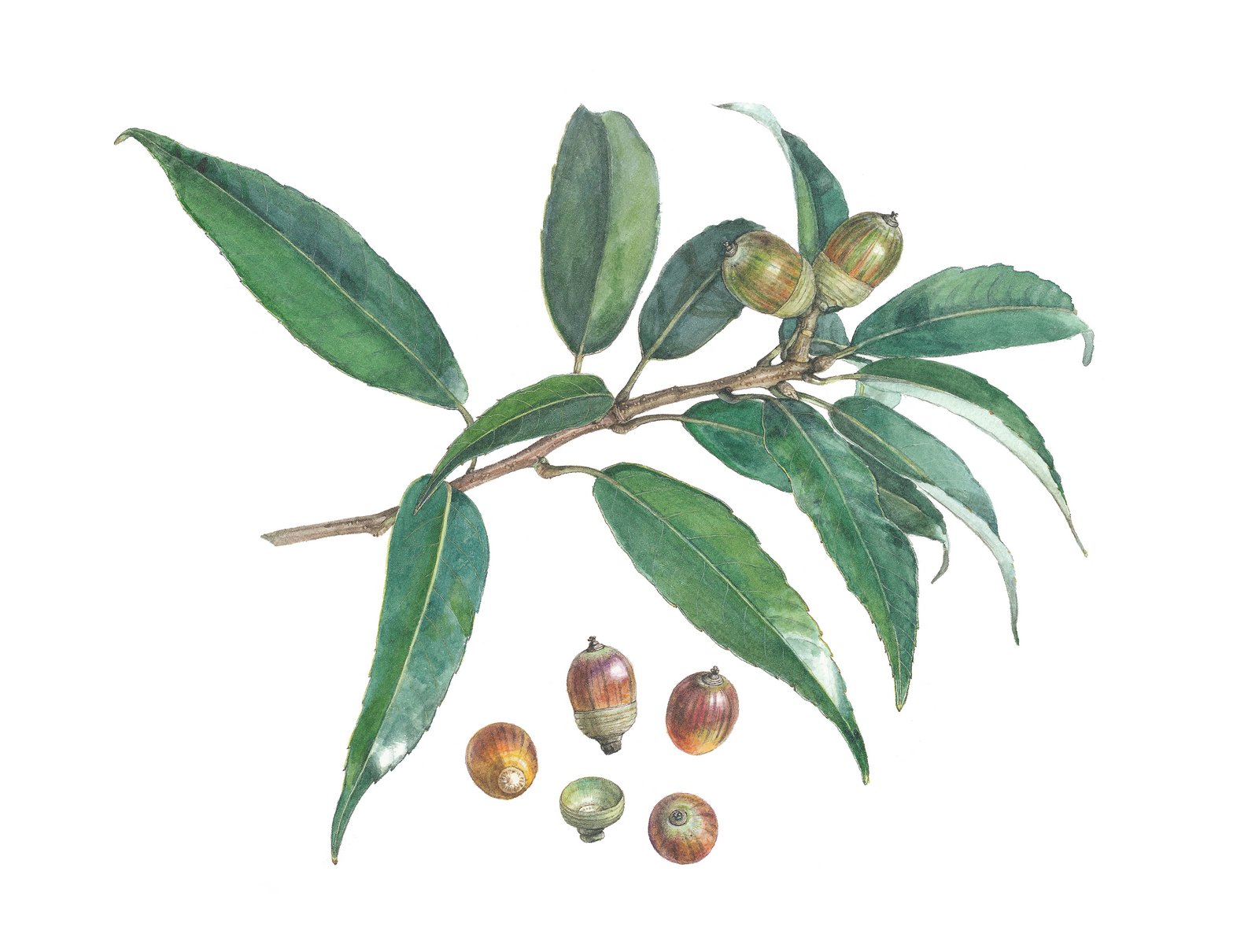 |
| Quercus myrsinifolia Blume |
Fagaceae drop fruit which can be good marks to locate the tree. So I chose them. Japanese children like acorns. They go to the park every autumn to pick acorns and colored leaves, and make toys or handcrafts in kindergarten or elementary school. There are many kinds of acorns, round, big or small, but we call all of them donguri in Japan. Even adult people call them donguri, not knowing the exact species name, and sometimes they tell me they do not know that oaks flower.
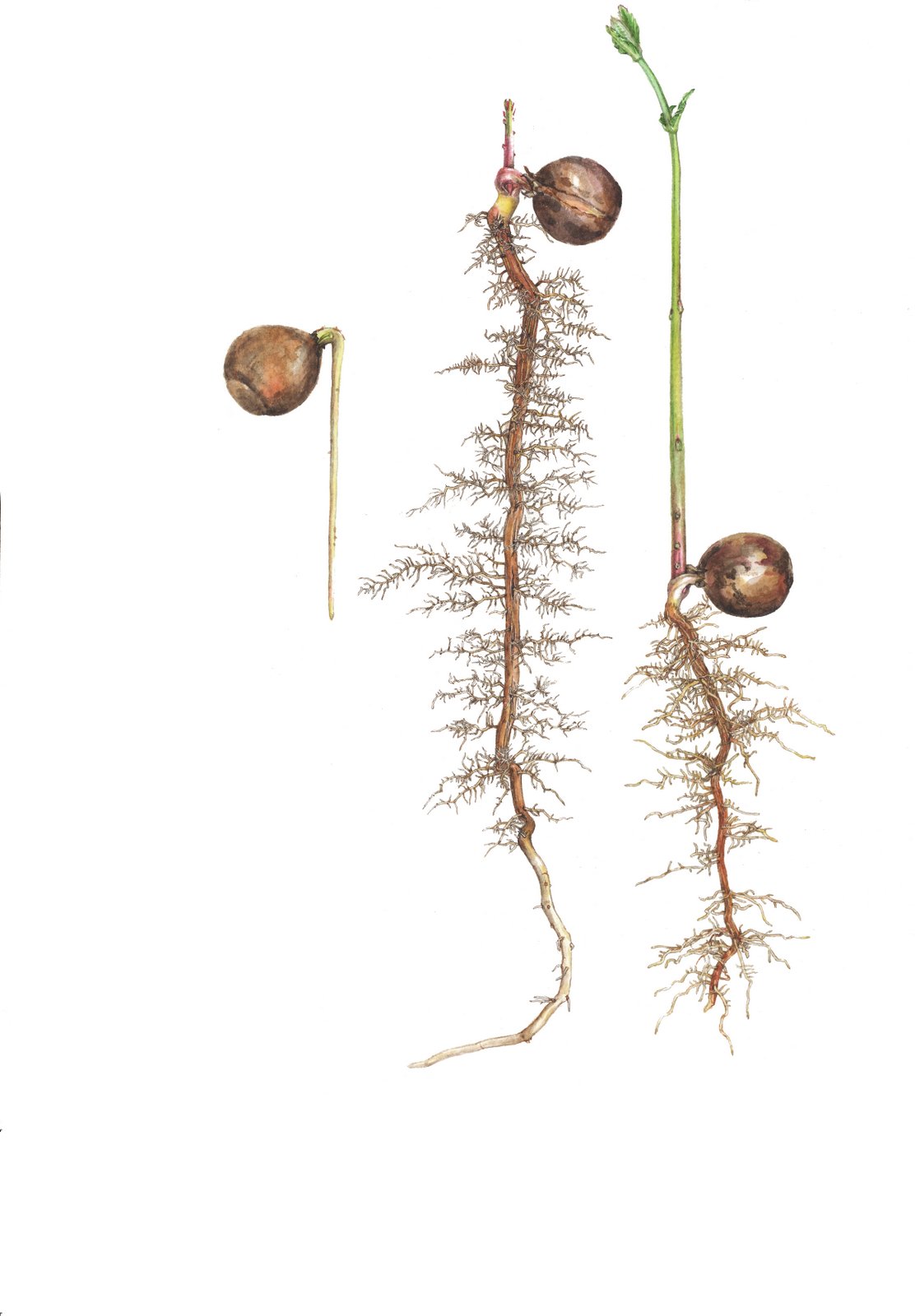 |
| Quercus acutissima Carruth. |
Japanese people ate acorns until a hundred years ago. Acorns are not tasty, but they were one of the available foods along with millet for the majority of people in feudal times, when only upper cl ass people could eat rice. So acorns helped save many people then and were a part of the culture of the time. However, as the first phonic character don means inferior or second grade, don-guri means not tasty as guri, which means chestnut. It is true, but I think it is an unfair name considering their contribution in the past.
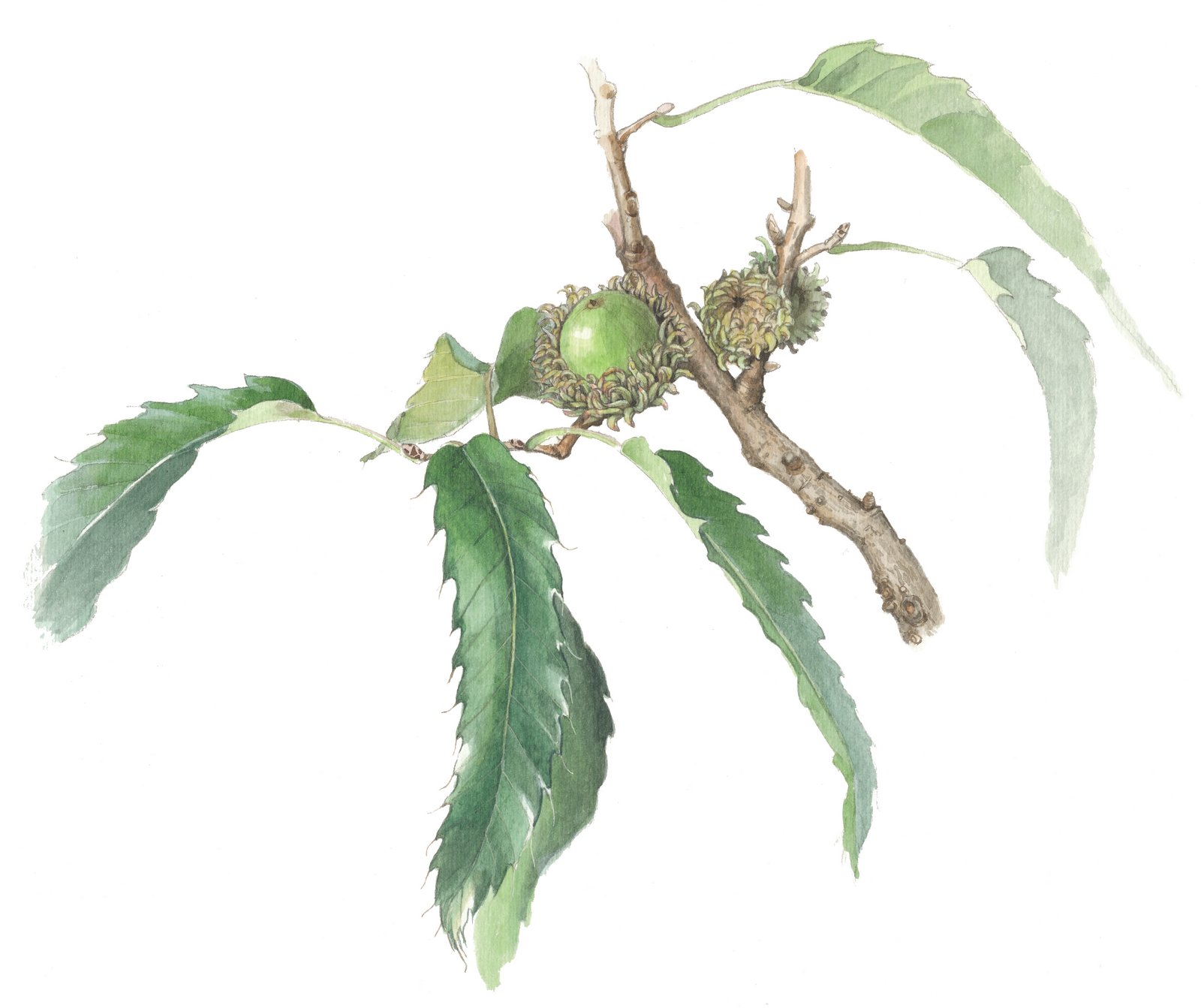 |
| Quercus acutissima Carruth. |
I learned a lot while drawing, then I wanted to know more and it kept me drawing. Since publishing my book I travel internationally with my retired husband to find noteworthy acorns, like the largest or the smallest. It is really fun, but what is more important is that I have been able to meet many friendly people around the world through my drawing activity.
Keiko Tokunaga

For more information on Keiko's art cilck here.
Content by the Same Author
The International Oak Society acknowledges the generous support of the following institutions:
Supporting Institutional Members



Standard Institutional Members